Joseph Cornell
Untitled (Bébé Marie)
early 1940s · MoMA
SourceArt & Context
Throughout art history, objects from everyday life and natural materials have become means of artistic expression in different ways. This section introduces some of these approaches. The comparisons do not imply that they influenced Yulia.
Three-dimensional compositions made from separate objects and materials. Joseph Cornell — Untitled (Bébé Marie); Louise Nevelson — Sky Cathedral. The relationships between elements and the space of the composition are of particular interest.
An object can become an artwork or part of an artistic statement. Marcel Duchamp — Bicycle Wheel; Meret Oppenheim — Object. Familiar objects acquire a different context.
Materials found in the surrounding world can become part of an artwork. Pablo Picasso — Tête de taureau; Richard Long — Cornish Stone Circle. Long's arrangement of stones in space is particularly interesting here.
Three-dimensional forms project from a surface; light and shadow contribute to the perception of form. Jean Arp — Enak’s Tears (Terrestrial Forms).
Enak’s Tears (Terrestrial Forms)
1917 · MoMA
SourceAttention is directed towards the making of the work and the properties of the material. Robert Morris — Untitled (Brown Felt); Richard Long — A Line Made by Walking. For Yulia, the process matters, but the completed work also retains its own significance.
The Chinese tradition of gongshi and the Japanese tradition of suiseki draw attention to the expressive natural forms of stones. They are interesting as ways of observing, rather than direct equivalents of Yulia's compositions.
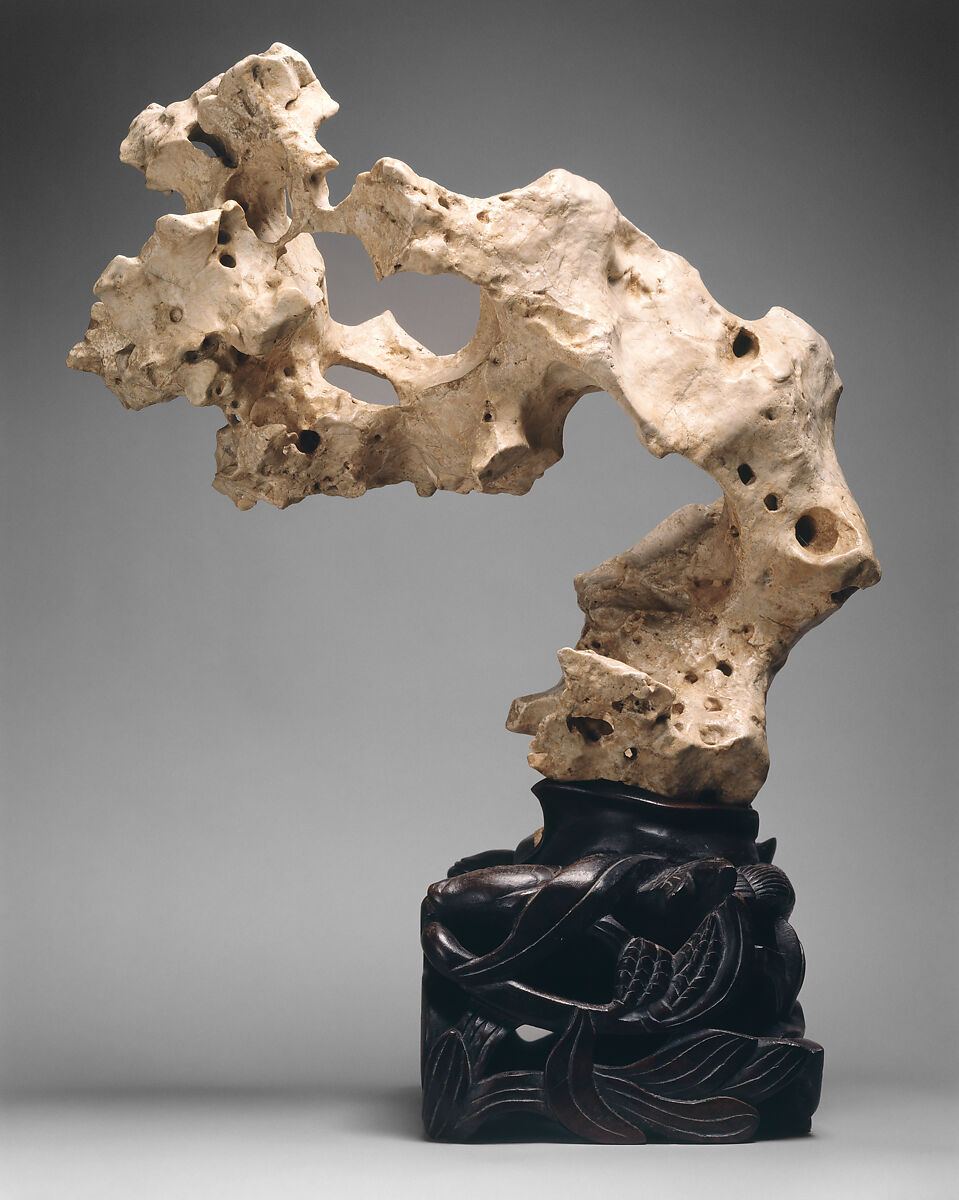
China. Scholar’s rock, probably 17th century. White Taihu limestone; wood stand.
The Metropolitan Museum of Art · Rosenblum Family Collection, Gift of Anna Rosenblum Palmer, 2011 · Public Domain / Met Open Access
Source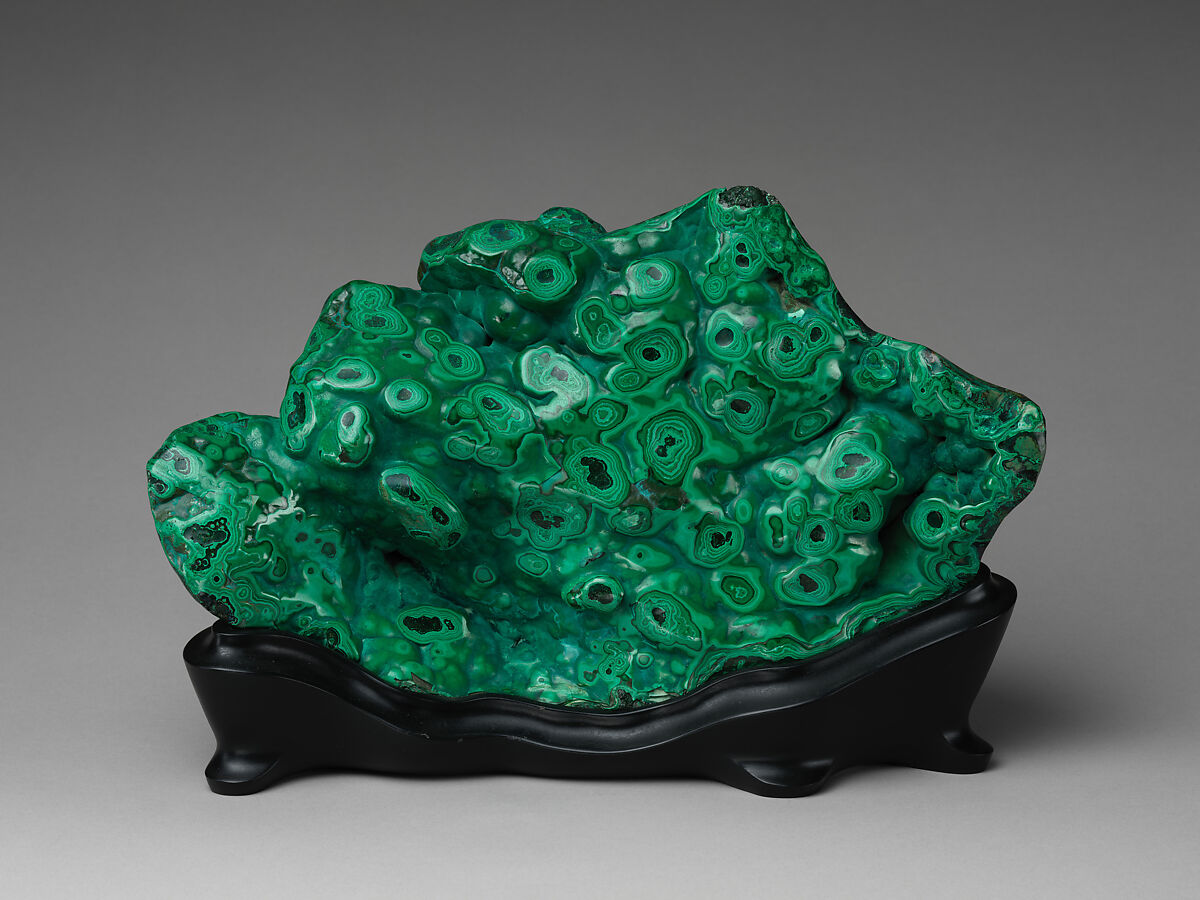
China. Scholar’s Rock in the Form of a Fantastic Mountain, 19th–20th century. Malachite.
The Metropolitan Museum of Art · Gift of Robert D. Mowry and Arthur W. Asbury, in memory of Carol Stephens, 2021 · Public Domain / Met Open Access
SourceJapan. Takarabune suiseki with wooden stand and box. Photo: Escuadro, 2023.
Wikimedia Commons; photographed at Uchiku-tei Garden, Saitama · Escuadro · CC BY-SA 4.0
CC BY-SA 4.0 Source